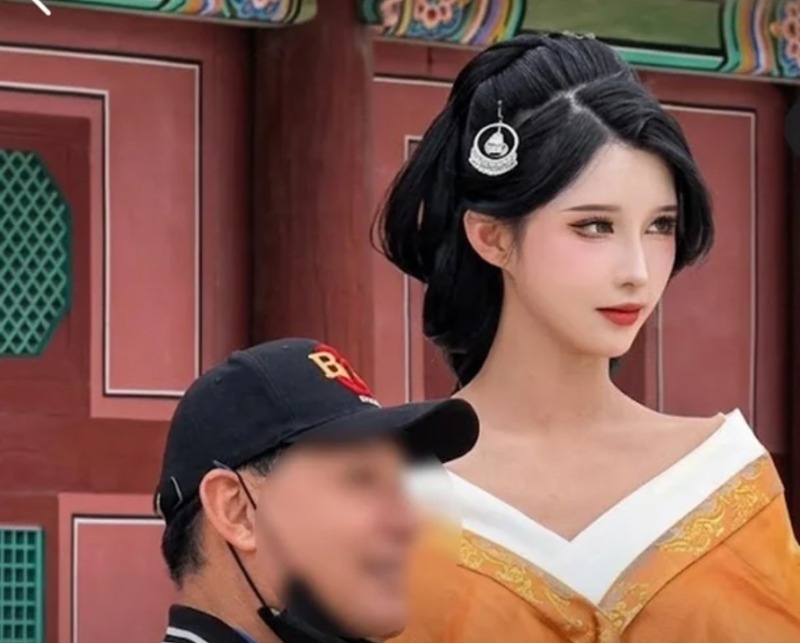
On the 26th, a Chinese male influencer introduced himself as a 'Chinese culture promoter' said he wore costumes reminiscent of Chinese historical dramas and visited Osaka Castle and major tourist spots like Dotonbori to take photos and videos. At Osaka Castle, he wore traditional Chinese costumes against the backdrop of the castle and took photos with tourists, and around the Dotonbori Glico Statue, he appeared in armed attire, and many tourists requested to take pictures with him on site. On the local online site, There were reactions like, "Why do people confuse people by wearing Chinese clothing at other countries' historical sites?" but the problem is that similar unfamiliar scenes have recently been witnessed repeatedly around Seoul's Gyeongbokgung Palace and Gwanghwamun. In fact, When a cable TV news team showed foreign tourists a video of Hanfu wearing at Gyeongbokgung Palace and asked what kind of clothing it was, some French and Italian tourists answered it was 'hanbok.' For foreigners who don't know much about Hanfu or Hanbok, the background of being a Korean palace can be an important clue to the identity of the costume. During the Cultural Revolution, much of China's traditional culture and heritage were damaged, and as China grew economically, interest in traditional culture and history rapidly increased,,,, during this process, the concept of the 'Chinese nation,' which unites not only the Han Chinese but also the histories of various ethnic groups and dynasties into a single Chinese history, began to be strongly emphasized. In the past, individuals While it used to be just taking a single photo at a travel destination, now a single photo and video has become content exposed to hundreds or millions of people. ,,, there are concerns that creating content in costumes reminiscent of Chinese emperors or generals at historical sites like Gyeongbokgung Palace or Osaka Castle can be interpreted as something different from simple tourist photography!!!!!!
Comments 0
Log in to comment.