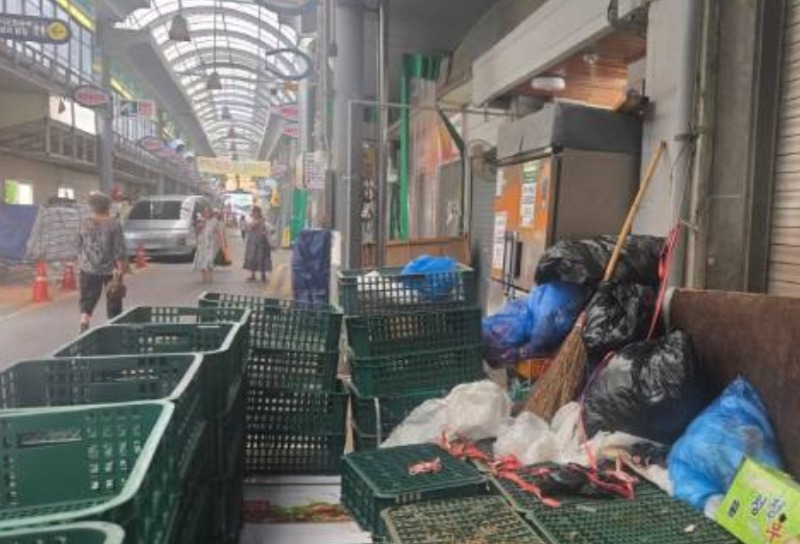
On the morning of the 1st, at Malbau Market in Buk-gu, Gwangju. In one alley, packed with vegetables, fish, and side dish shops, there were mixed-use waste bags, styrofoam boxes, and other boxes. Merchants had swept and tidied up their shops before starting business, but by evening when the market closed, the garbage piling up everywhere caused them headaches. In response, Buk-gu plans to pilot a 'door-to-door real-name dispensing system' for about 400 merchant members at Malbau Market, The method is simple: when merchants put out their garbage bags, they must attach stickers with the store's name on them. In principle, garbage without stickers or mixed with food and other waste is not collected, but the goal is to check who disposed of what kind of waste and reduce improper disposal. Supporters of the system say, "There are cases where even merchants who sincerely separate and dispose of trash anywhere get criticized," and added, "Who If we can confirm whether someone has thrown away, I think fewer people will throw things away carelessly," ,,, on the other hand, those who are also concerned say, "We're busy dealing with customers all day, so now there's one more thing to pay attention to when sticking stickers and removing them," and added, "The administration should properly regulate some people who throw away things by mistake, so I don't understand why they are placing more responsibility on the merchants." It's uncertain whether the real-name system can solve the entire market's waste problem, Since it is a space where street vendors, visitors, delivery companies, and various people come and go, it is difficult to assume that all the trash discarded around the market comes from the merchants, so the real-name system targeting stores alone has limitations in blocking illegal dumping. Moreover, there is no legal basis to impose fines even if one does not participate in the real-name system, so the effectiveness of the system depends on the voluntary participation of merchants.
Comments 0
Log in to comment.